You just drove an hour to those beautiful sunflower fields you saw all over Instagram and now you’re standing in the parking lot second-guessing your entire outfit.

The sun is brutal. The rows are muddy. Your shoes already have dirt on them and you haven’t even made it past the entrance sign. Meanwhile, everyone else looks effortlessly put together in their flowy dresses and wide-brimmed hats like they were born to frolic through the sunflower farm.
Here’s the truth: a sunflower field photoshoot outfit isn’t just about looking cute for photos. It needs to survive heat, dirt, bees, uneven terrain and stems that snag everything. The best outfits balance Instagram-worthy aesthetics with genuine comfort and practicality.
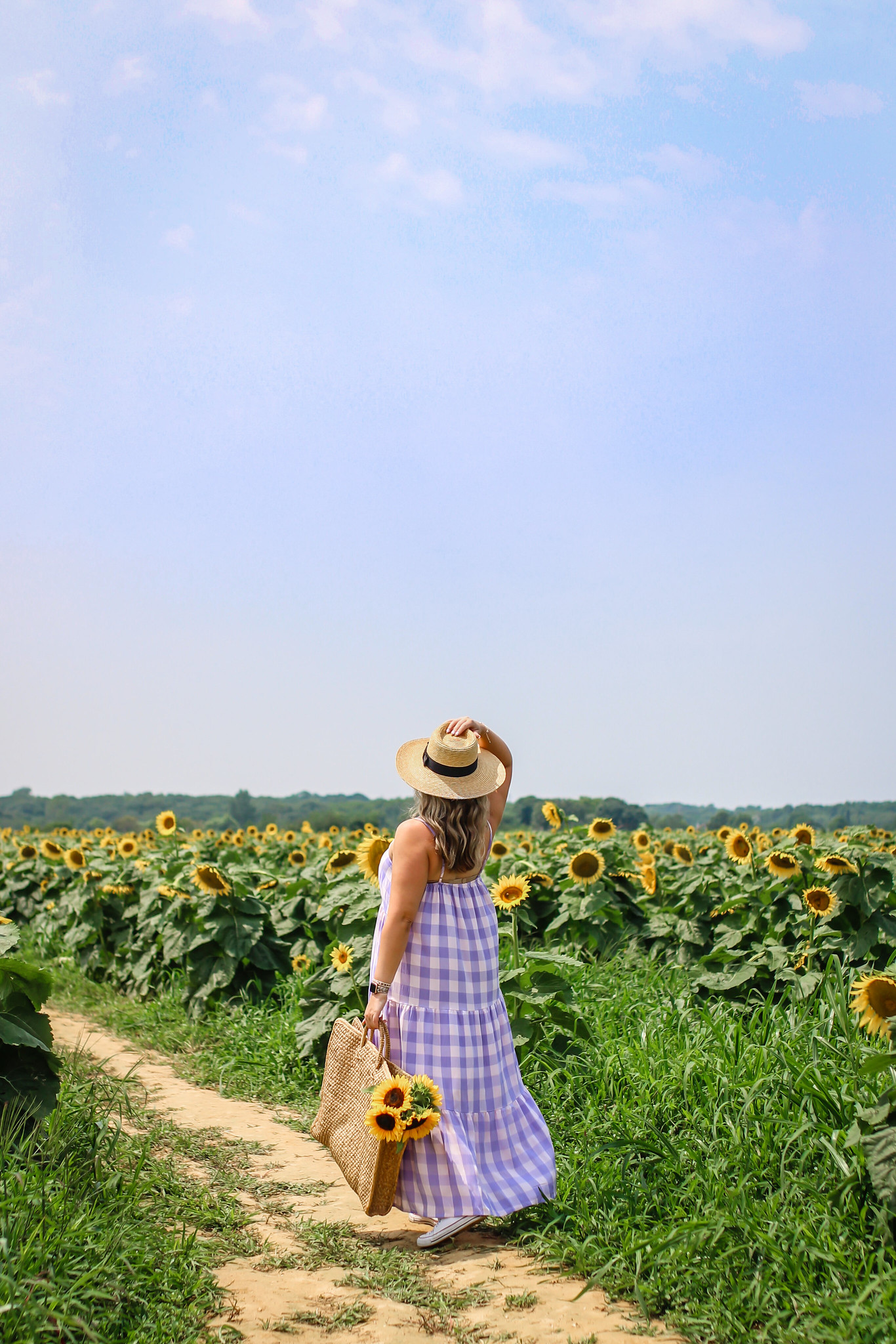
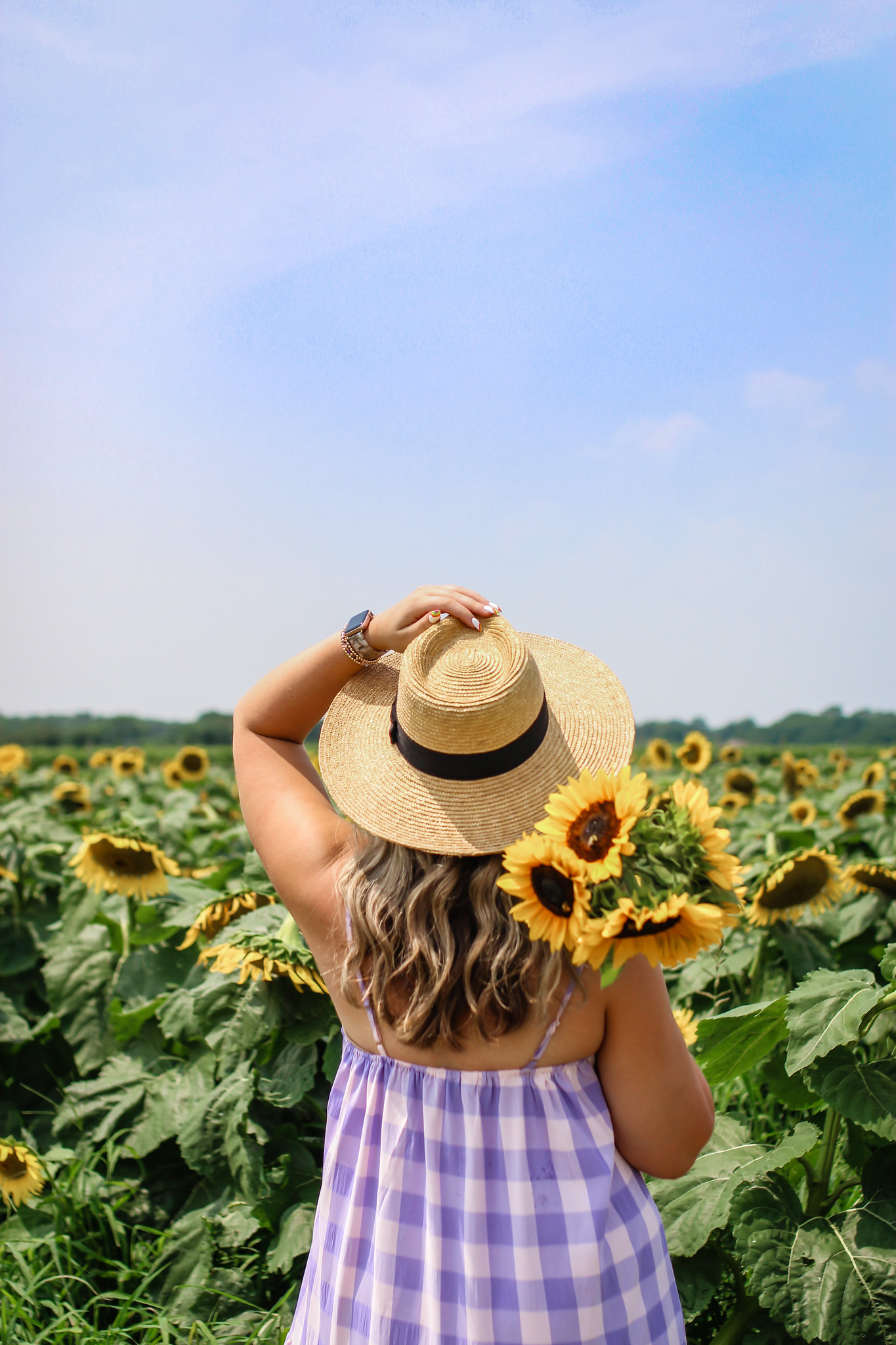
This quick guide breaks down exactly what works, what doesn’t, and how to plan an outfit that photographs beautifully while keeping you cool and comfortable for your sunflower field visit.
What to Wear to a Sunflower Field
The Best Colors to Wear Around Sunflowers
Certain colors make you pop during your sunflower portrait session, while others blend into the background or create awkward color clashes you won’t notice until you’re editing later.
Sunflowers are warm-toned, which means your outfit needs to either complement the soft golden tones of the field or create intentional contrast. Vibrant yellows and bright white are the two colors you’ll want to avoid. Yellow blends into the field and makes you disappear in wide shots. Bright white reflects harsh sunlight and often looks blown out in photos, especially during midday.
Top color picks that photograph beautifully:
- Rust, terracotta and burnt orange – These earthy tones complement the warm yellows without competing. They create a cohesive, autumn-inspired aesthetic that feels natural in a farm setting.
- Sage green, olive and muted greens – Green contrasts beautifully with yellow and ties into the natural leaf tones of the rich green stems. This combo feels organic and visually balanced.
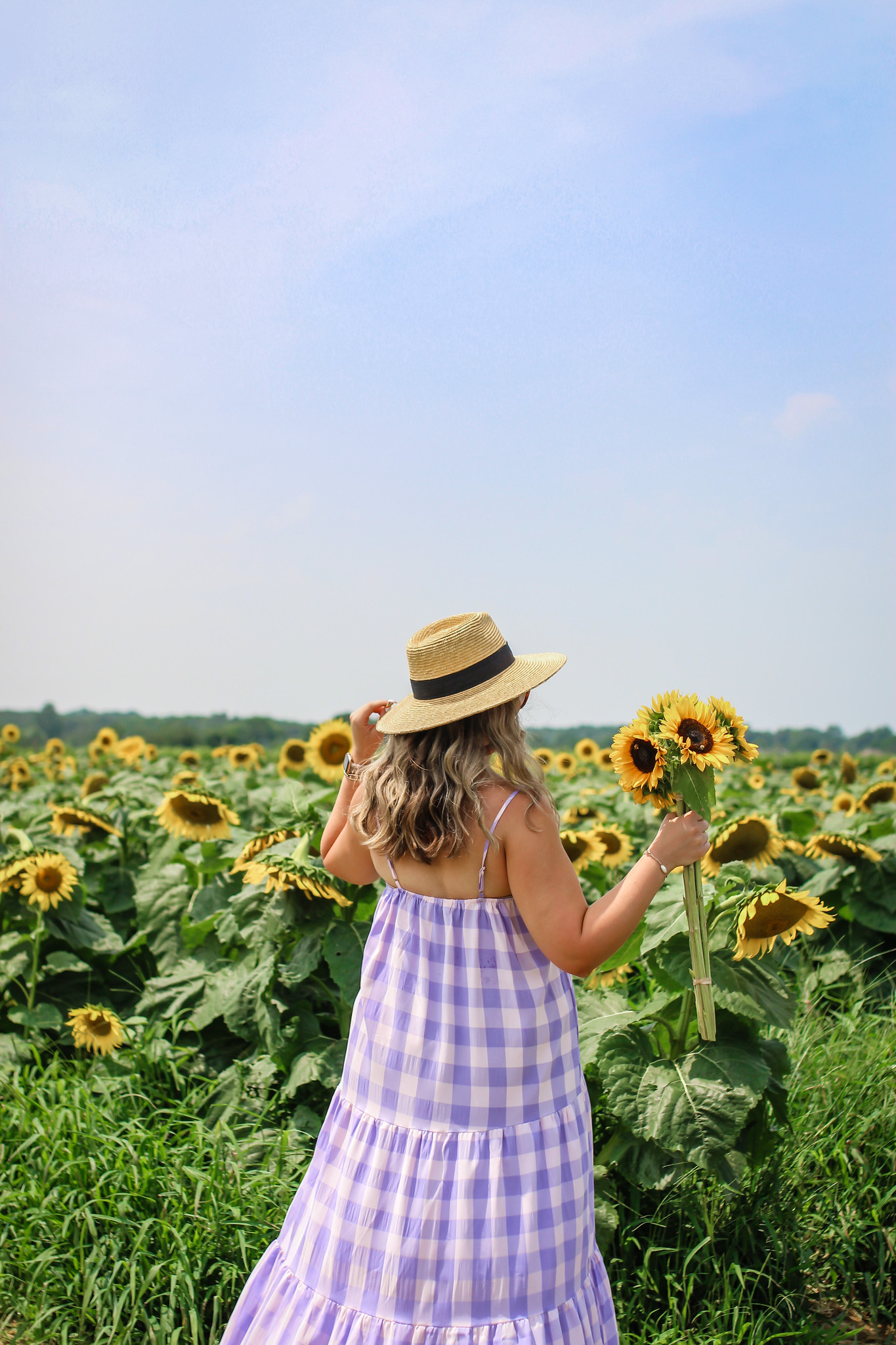
- Pastel purple and lilac – Complementary colors, colors that sit across from each other on the color wheel, are always excellent choices when when styling picture-perfect outfits. Soft purple and yellow paired together creates a dreamy combination.
- Deep navy and denim blue – Blue and yellow create strong visual contrast and a vibrant, cheerful and balanced look. Denim specifically adds a casual, farmhouse vibe that fits the setting perfectly.
- Soft cream and off-white – These work better than bright white because they don’t reflect as harshly. They create a dreamy, romantic look without the overexposure issue.
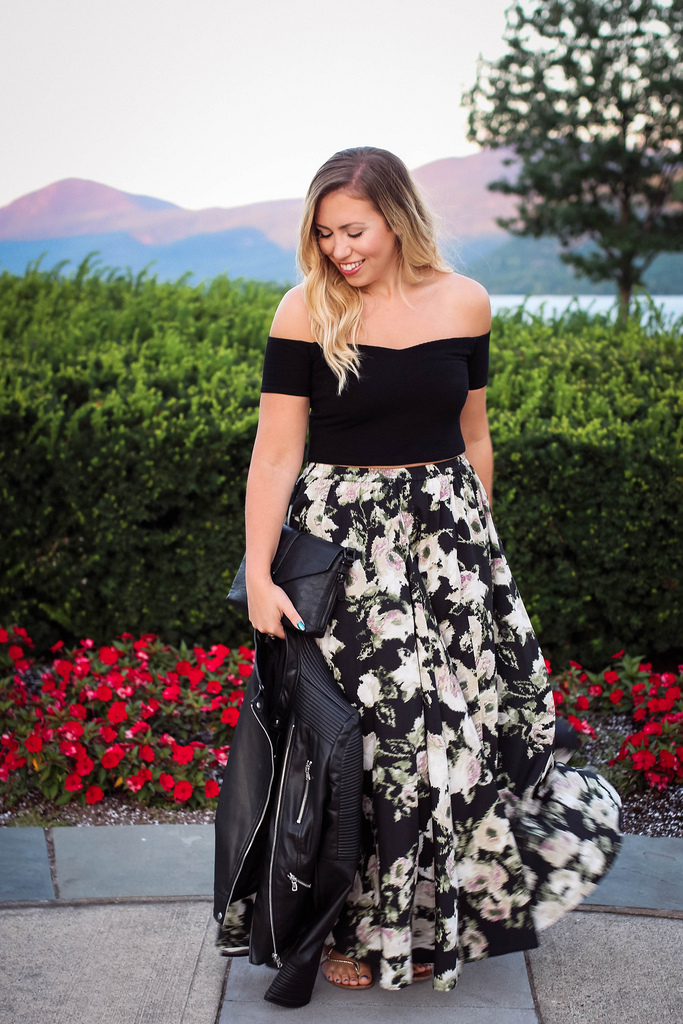
- Black and charcoal – Unconventional but striking. Dark tones create dramatic contrast and make the field of sunflowers look even more vibrant. This works especially well for editorial-style shots.


Fabric Choices That Keep You Cool and Comfortable
Sunflower fields are hot, dusty, and often lack shade. Light knits are a must, the wrong fabric will have you drenched in sweat within 20 minutes and synthetic materials trap heat in ways that make the experience miserable. If you listen to anything in this ‘What to Wear to a Sunflower Field’ guide have it be this!
Breathable natural fabrics:
- Linen – The gold standard for hot-weather dressing. It’s lightweight, breathable and has a relaxed texture that photographs beautifully. Linen wrinkles easily, but that’s part of the aesthetic. The rumpled look feels intentional and effortless in outdoor settings.
- Cotton – Classic, breathable and widely available. Cotton sundresses, button-ups and wide-leg pants all work well. Look for lighter-weight cotton rather than thick denim or heavy twill.
- Cotton blends – A small amount of spandex or elastane adds stretch and helps the fabric hold its shape without sacrificing breathability. This is ideal for fitted styles that still need airflow.
- Chambray – Lighter than denim but with the same casual vibe. Chambray shirts and dresses are perfect for the farmhouse aesthetic without the weight and heat retention of traditional jeans.
Avoid these fabrics: Polyester, rayon, and heavy knits trap heat and don’t allow your skin to breathe. Satin and silk look beautiful but stain easily and snag on rough stems. Save those for indoor shoots.
The best fabric choice depends on the temperature and time of day. Early morning or late afternoon visits can handle slightly heavier materials, but midday heat demands the lightest, most breathable options you own.
Dress and Skirt Styles That Photograph Well
Dresses are the most popular choice for sunflower field photos because they’re easy, feminine and create movement in shots.
However, not all dress styles work in this environment. Maxi dresses drag through dirt and mud. Tight bodycon styles restrict movement and make walking through uneven rows uncomfortable. The sweet spot is knee to midi length with enough flow to move naturally but not so much fabric that it becomes a hazard.
Best dress and skirt styles for your sunflower session:
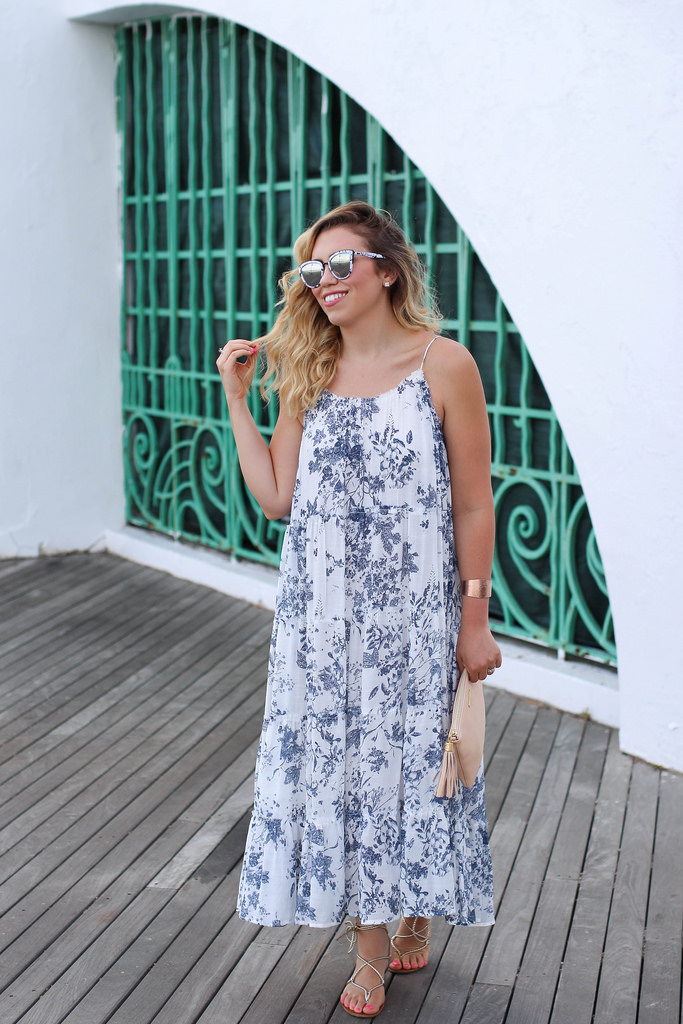
- Midi-length sundresses with a defined waist – These create a classic silhouette that flatters most body types. The defined waist adds structure to photos, and the midi length keeps fabric off the ground while still providing coverage.
- Flowy dresses – A flowy dress creates beautiful movement when you spin or walk. This style is ideal for playful, candid shots.
- Wrap dresses – Adjustable, flattering and easy to style. The V-neckline elongates your frame in photos, and the wrap tie adds a feminine detail that photographs well.
- Button-front midi skirts – Pair these with a tucked-in tee or crop top for a casual, put-together look. The buttons add visual interest and the midi length is practical for walking through fields.
- Tiered or ruffled skirts – These add texture and dimension to photos. The layers create depth and movement, which keeps images from looking flat.
Styling tip: Avoid anything too short if you’re planning to crouch, sit, or pose in the field. Sunflower farms often have uneven ground, and you don’t want to spend the entire shoot tugging your hem down.

Top and Bottom Combinations for a Casual Look
Not everyone wants to wear a dress, and that’s completely fine.
Separates give you more styling flexibility and can feel more comfortable if you’re planning to spend several hours at the farm. The key to finding what to wear to a sunflower field is balancing proportions so your outfit still photographs well without the automatic polish that dresses provide.
Top ideas:
- Tucked-in tees or tank tops – Simple, clean and easy to style. Tucking in your top defines your waist and creates a more intentional look than leaving it untucked.
- Cropped blouses or sweaters – These pair perfectly with high-waisted bottoms and create a balanced silhouette. Cropped tops add a youthful, modern edge to the farmhouse aesthetic.
- Off-the-shoulder or puff-sleeve tops – These add a romantic, feminine touch without being overly formal. The extra detail in the sleeves creates visual interest in upper-body shots.
- Linen button-ups – Tie them at the waist, wear them oversized or style them half-tucked. Linen shirts are versatile and keep you cool in direct sun.
Bottom ideas:
- High-waisted denim shorts – Classic, flattering, and practical. Light-wash or medium-wash denim works best. Avoid distressing that’s too heavy, as it can look messy in photos.
- Wide-leg linen pants – These create elegant, flowy movement and keep you incredibly cool. Neutral tones like cream, tan, or sage green work beautifully.
- Midi skirts – Pair a denim midi skirt with a simple white tank for an effortless, clean look. This combo is easy to style and works for almost any body type.
- Paperbag-waist trousers – These add structure and style while remaining comfortable. The cinched waist creates definition and the relaxed leg keeps you cool.
When styling separates, aim for one fitted piece and one relaxed piece. If your top is cropped and fitted, wear wide-leg pants. If your bottoms are high-waisted and structured, opt for a relaxed or flowy top. This balance keeps your outfit from looking too tight or too shapeless.


Footwear That Handles Dirt and Uneven Ground
Your shoes will get dirty. Accept that now.
Sunflower fields are working farms, which means dirt paths, uneven rows, mud patches and the occasional hidden hole. Heels and delicate sandals are a disaster waiting to happen. Your footwear needs to be comfortable, stable, and easy to clean.
Best shoe options:
- Ankle boots or booties – These are the most popular choice for sunflower field outfits. Leather or faux leather ankle boots provide support, protect your feet, and add a rustic vibe to photos. Choose a low block heel or flat sole for stability.
- White sneakers or canvas shoes – Casual, comfortable and surprisingly chic. Sneakers keep the outfit relaxed and make walking through the field effortless. They will get dirty, so wear a pair you don’t mind cleaning.
- Flat sandals with ankle straps – If it’s hot and you want open-toed shoes, choose sandals with back straps so they stay secure. Avoid flip-flops or slides, which will slip off in loose dirt.
- Espadrille wedges – These add height without the instability of stilettos. The wedge distributes weight evenly, making them easier to walk in on uneven ground. Stick to low or medium wedges.
- Slip-on mules – Backless mules are easy to slide on and off, but make sure they fit snugly. Loose mules will come off as you walk, which is frustrating and ruins the flow of your shoot.
Avoid: Stilettos, thin heels or any shoe with a narrow base. These sink into dirt and make walking nearly impossible. Also skip brand-new shoes you’re precious about. They will get scuffed and dusty. I would also avoid bare feet, comfortable shoes are a must!
Accessories That Elevate Your Look
When deciding what to wear to a sunflower field know that accessories are the finishing touch that takes your outfit from basic to curated.
The right hat, jewelry or bag can completely shift the vibe of your photos and add personality to your look. But in an outdoor farm setting, accessories need to be functional, not just decorative. Wind, sun, and movement can make delicate pieces more trouble than they’re worth.
Hats:
- Wide-brimmed straw hats – A straw hat is the most iconic accessory for sunflower field photos. They provide sun protection, frame your face beautifully, and add a romantic, vintage-inspired touch. Make sure the hat fits snugly so it doesn’t blow off in the wind.
- Floppy felt hats – Great for a boho or western vibe. Choose neutral tones like tan, black, or cream. Felt hats photograph with more texture and weight than straw, which can add depth to your shots.
- Baseball caps – If you want a casual, sporty look, a clean baseball cap works. This is especially good if you’re going for a relaxed, candid aesthetic rather than formal portraits.
Jewelry:
Keep it simple. Delicate gold or silver necklaces, small hoop earrings, and thin bracelets add polish without overwhelming the natural setting. Avoid anything too chunky or loud. The sunflowers are already a bold visual element, so your jewelry should complement, not compete.
Bags:
- Straw tote or woven basket bag – Perfect for the farmhouse aesthetic. These bags are practical, stylish, and fit the vibe of a countryside outing and the essence of summer.
- Crossbody or belt bag – Keeps your hands free and stays secure while you move. Choose a neutral color that blends with your outfit.
- Small leather satchel – Adds a polished touch without being too formal. This works well if you’re going for a more put-together look.
Sunglasses:
Sunglasses are a great accessory to keep you from squinting if you taking photos mid-day. But sunglasses can also hide your eyes and create shadows that flatten your face. Take a few test shots to see if you need them or not.
Practical Considerations Beyond the Outfit
Looking good in photos is one goal, but when deciding what to wear to a sunflower field, surviving the heat, bugs and sun exposure is another.
Bring sunscreen and reapply it. You’ll be in direct sun for extended periods, and sunburns show up in photos as red, blotchy skin. Use a facial sunscreen that won’t leave a white cast or greasy shine. Apply it 20 minutes before you arrive so it has time to absorb.
Bug spray is non-negotiable. Sunflower fields attract bees, flies and mosquitoes. Spray your clothes and exposed skin before you start shooting. Choose an unscented formula if possible so it doesn’t clash with perfume or attract more insects.
Bring a small towel or wipes. Your hands will get dirty from touching stems and leaves. A microfiber towel or pack of wipes lets you clean up quickly between shots without leaving visible dirt smudges on your clothes.
Check the weather and plan accordingly. If it rained the day before, the field will be muddy. Wear closed-toe shoes and avoid long hemlines that will drag. If it’s going to be hot, prioritize lightweight fabrics and bring a water bottle.
Timing matters. The best light for photos is early morning or late afternoon during golden hour. Golden hour sessions are truly the absolute best and I can’t recommend them enough. Midday sun is harsh and unflattering. If you’re visiting midday, plan for shorter sessions and take breaks in shaded areas.
Respect the farm rules. Many sunflower fields are working farms or paid photo locations. Don’t pick your own sunflowers unless allowed, stay on designated paths and be mindful of other visitors. Your outfit won’t matter if you’re asked to leave for damaging crops.

Sunflower field visits are magical when you’re prepared. The right outfit balances style with comfort, color theory with practicality and aesthetics with real-world conditions. When you plan ahead, you’ll walk away with stunning photos, memorable moments and actual enjoyment of the experience, not just sore feet and regret.
The flowers are only in full bloom for a few weeks each year. Sunflower season depends on where you live, but for most places it runs from mid July to late summer or early fall. Make the most of it by showing up in an outfit that works as hard as you do.
Looking for more sunflower inspo? I’ve got an entire guide with the best NY sunflower fields to visit!
PIN my What to Wear to a Sunflower Field Guide for LATER:




Leave a Reply